
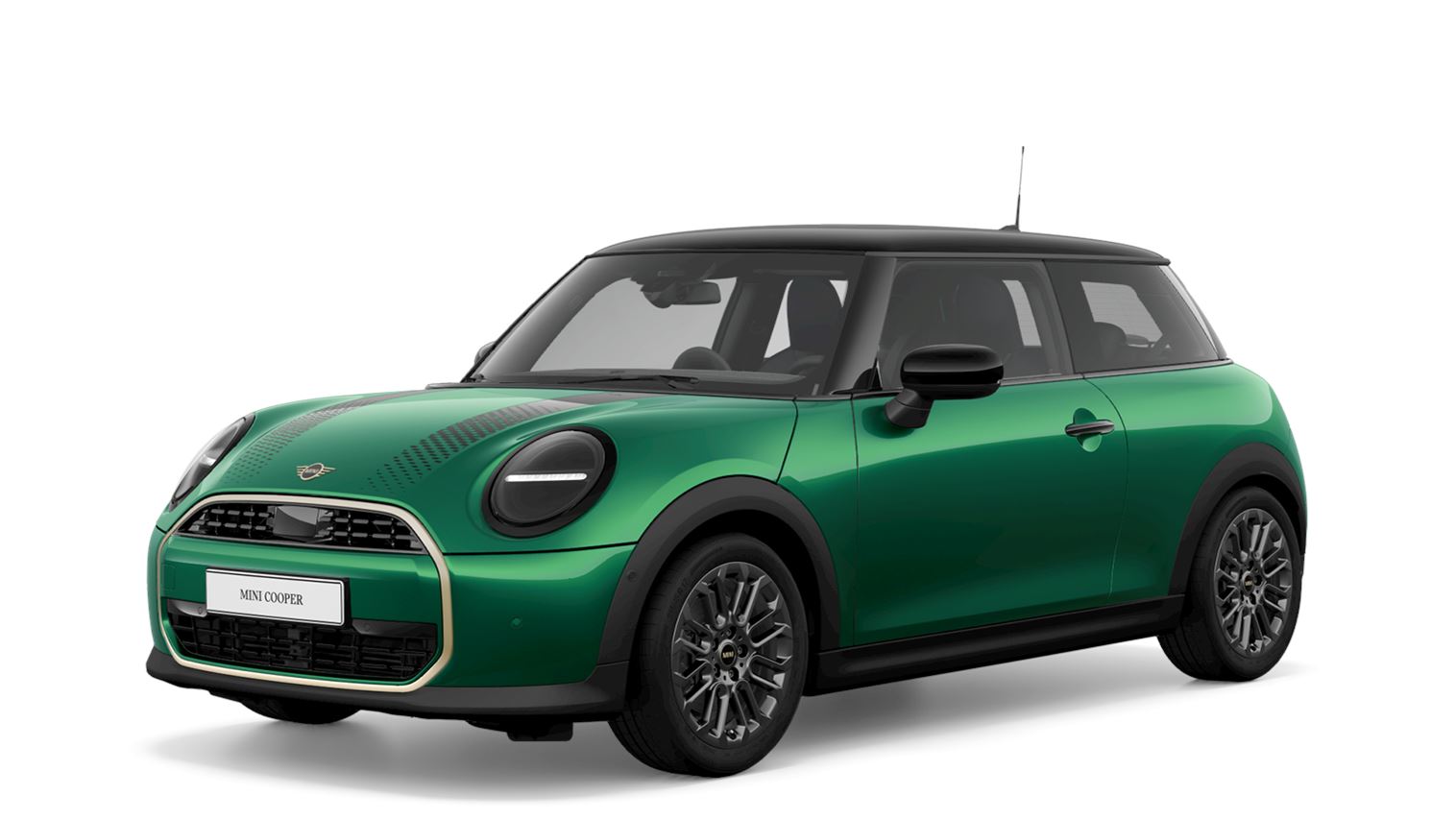
MINI Cooper
C Favoured Trim petrol FWD automatic
Sustainability Rating: 3 stars
Our verdict:
Tested here is the conventional version of the Mini Cooper with 115 kW and no powertrain hybridisation. Although this Mini is unable to achieve a high sustainability rating, it does well for its type and reaches an average score of 52%, which is enough for a well-deserved 3 stars rating. As expected, it does not disappoint with emissions control and collects a good number of points here. The weaknesses are related to the fossil fuel usage and the associated direct CO2 emissions.
- Stable emission control, but weaker in cold start and high load. Good tyre abrasion, but no brake abrasion mitigation; life cycle pollutants reduce the final score.
- Acceptable fuel use (6–7 l/100 km), but the lack of hybridisation lowers the propulsion efficiency. Low manufacturing energy demand improves the wholistic LCA result.
- Lifecycle emissions are 229.6 g CO2-eq./km, limiting the score. The low production emissions cannot offset the direct CO2 from fossil fuel combustion.
Driving Experience
Our comments:
The Driving Experience evaluation of conventional vehicles focuses only on the performance in the section 'Consumption and Range'. The Mini Cooper C's estimated real-world consumption figures receive an 'adequate' mark for all scenarios. The consumption readings on the board computer display are accurate.
See datasheet for more details.