
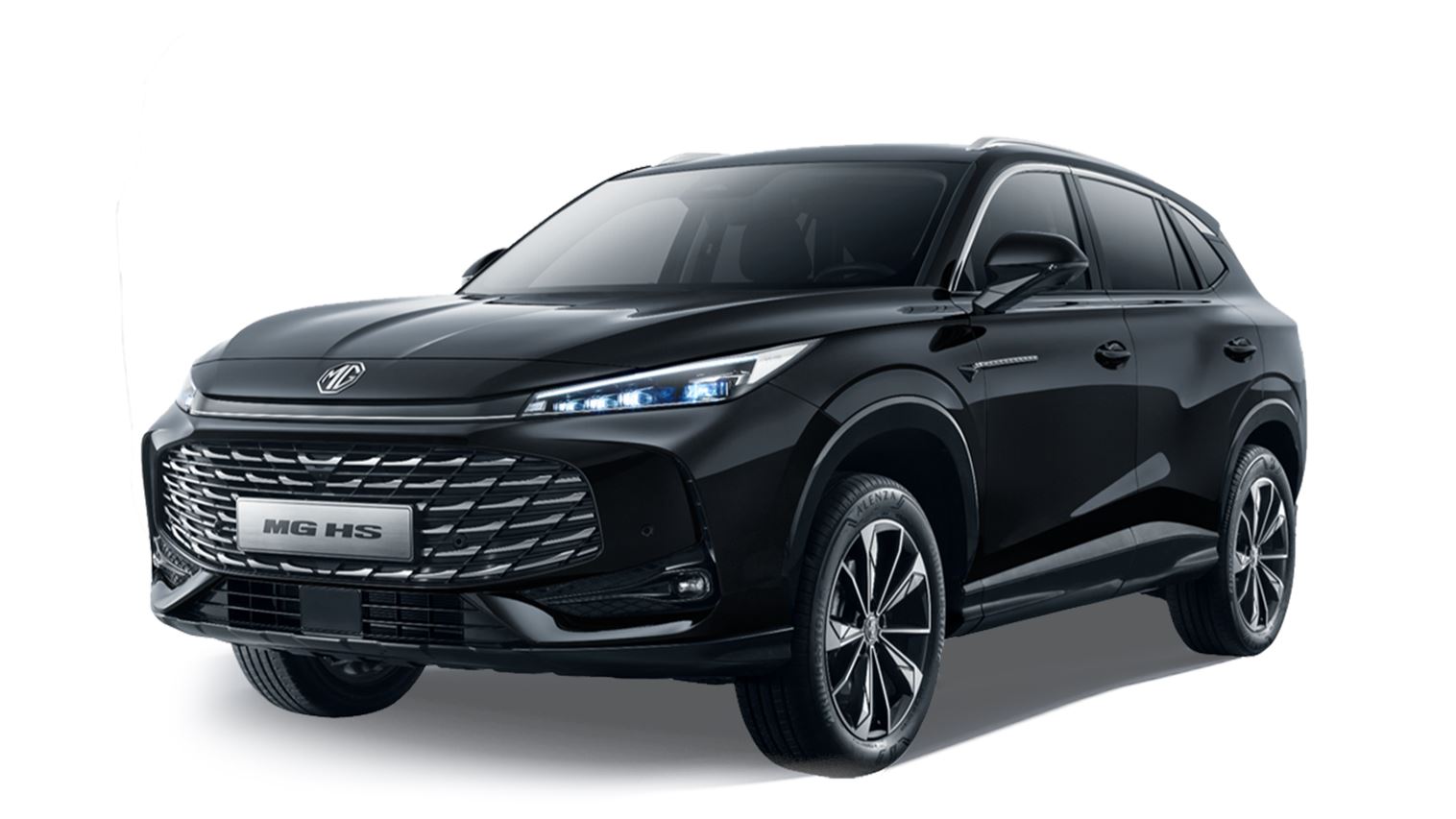
MG HS
1.5T GDI luxury petrol FWD automatic
Sustainability Rating: 1½ stars
Our verdict:
The relatively large, conventionally driven MG HS did not impress with a high star rating. The Energy Efficiency Index scored poorly and no points were collected for greenhouse gases. Yet the HS controlled its exhaust emissions reasonably, which contributed to a mid-range Clean Air Index. Consumers interested in a MG and seeking to reduce the energy demand and lower the climate impact can turn to other MG models with higher electrification level – several hybrids, plug-in hybrids and pure electric vehicles are currently offered.
- Good overall emission control, but weaker at cold start and high load; CO and particles are key. Tyre abrasion is moderate, but there is no mitigation of brake abrasion. The emissions related to fuel supply lower the score.
- Fuel consumption is typical (7.3–9.9 l/100 km), resulting in no efficiency points. A more holistic LCA view slightly improves the overall score.
- High life cycle emissions (303.7 g CO2-eq./km) exceed the threshold, leading to a low score. Production emissions are relatively low but cannot offset the CO2 from direct fuel combustion.
Driving Experience
Our comments:
The Driving Experience evaluation of conventional vehicles focuses only on the performance in the section ‘Consumption and Range’. The MG HS’s estimated real-world consumption figures receive a ‘poor’ mark in all scenarios. The final assessment in this section is ‘adequate’ as the consumption readings on the board computer display are accurate.
See datasheet for more details.