
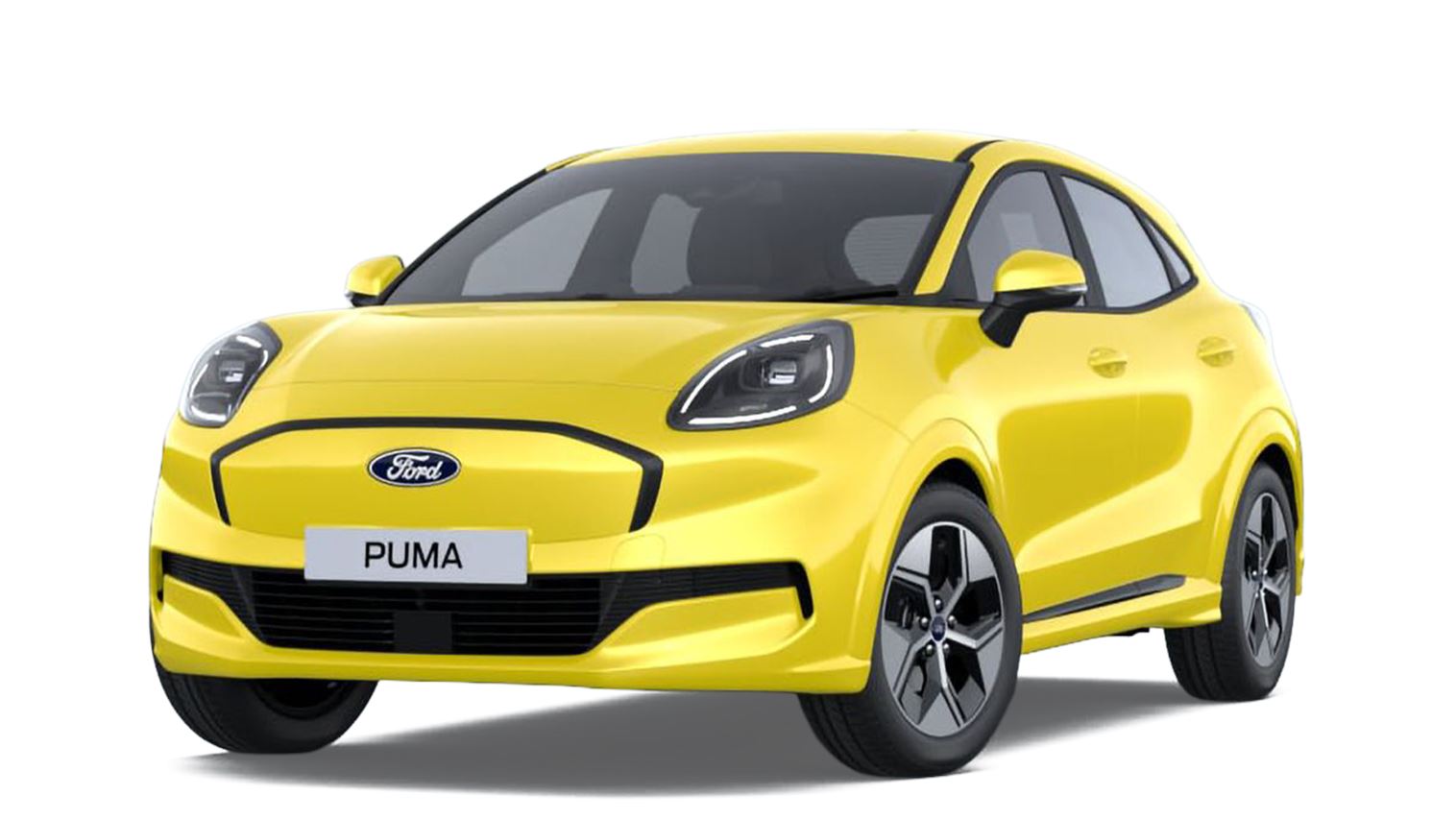
Ford Puma
Gen-E electric FWD automatic
Sustainability Rating: 5 stars
Our verdict:
Tested here is the Ford Puma Gen-E. This is a relatively light (1,491 kg empty mass) pure electric vehicle with a battery of 54 kWh installed capacity. This, together with the impressively low test consumption figures, give it a very high sustainability rating, typical only for really efficient, small and light EVs.
- Achieves excellent Clean Air performance with zero exhaust emissions and very low brake abrasion thanks to extensive regenerative braking. Loses some points for tyre abrasion due to aggressive accelerator calibration, while production- and electricity-related emissions remain very low.
- Delivers outstanding energy efficiency across all tests, including highway driving and cold-weather operation despite the absence of a heat pump. Records an exceptionally low 13.3 kWh/100 km in the on-road test.
- Achieves an excellent GHG score through very low electricity consumption, appropriate vehicle sizing and European production. Limits life cycle emissions to just 102.5 g CO2-eq./km, below Green NCAP's threshold for maximum points.
Driving Experience
Our comments:
The Ford Puma Gen-E's electric's Driving Experience ranges from poor to adequate.
- The car shows ægood' estimated real-world consumption values for warm weather conditions and mainly æadequate' figures in cold conditions. However, with the relatively small battery, which was found to deliver a useful capacity of only 42.4 kWh, the estimated real world driving range is regarded as æpoor' in all scenarios and the car is rather suited for city and short distance trips. Drivers can trust the consumption figures shown on the display but need to remember that, as with every other electric vehicle, the displayed figures do not reflect the energy charged from the grid, but only the energy the vehicle uses from its battery. The amount needed to charge it is naturally higher.
- The heating performance of the car in -7°C cold start conditions is poor, and the rear footwell did not reach the target temperature of 16°C during the test. The driving range benefit from preconditioning the car prior to a cold weather trip while it is still plugged in, is marginal. The cabin thermal insulation is adequate – the cabin temperature dropped by 7.4°C after 30 minutes at -7°C with a deactivated vehicle.
- The standard home AC charging receives an æadequate' mark. Contrary to what might be expected for a car of this type, the fast DC charging performance is impressive. A 10-80% battery recharge takes slightly more than 24 minutes. The vehicle doesn't offer any bidirectional charging functionalities.
See datasheet for more details.